
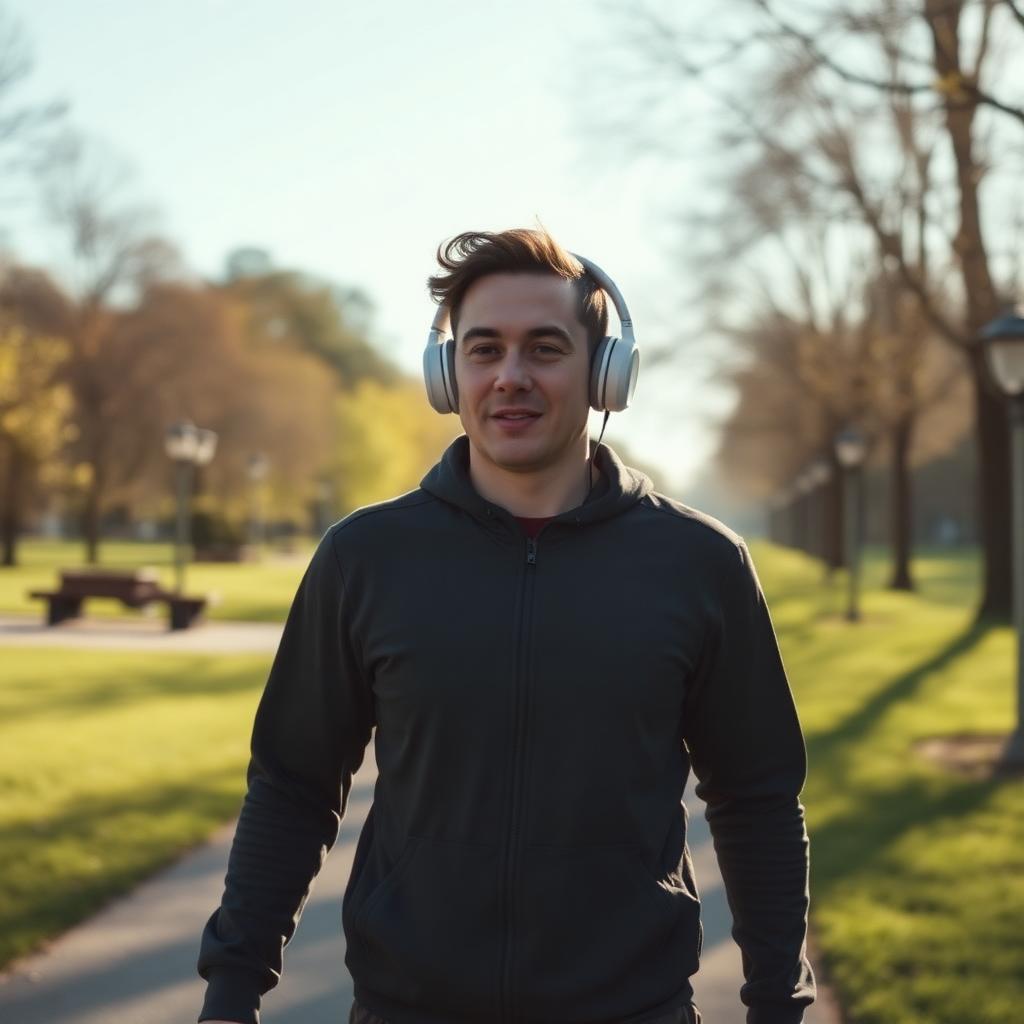
The right music turns a walk into a workout
Walking is the most accessible form of exercise on the planet — and music is the cheapest performance enhancer you can bring to it. Studies have shown that the right playlist increases stride rate, reduces perceived effort, extends time spent walking and improves adherence to a walking routine. In a corporate step challenge, music is often the difference between hitting 7,000 steps and hitting 12,000.
In 2026, AI music platforms like Vibebeats.ai can generate walking playlists tuned to your exact cadence, mood and duration — a step change on generic Spotify playlists. This guide covers the science, the BPM ranges, playlist structures and how to use music to unlock your next PUML step challenge.
The science: BPM, cadence and effort
Human walking cadence is typically 100–130 steps per minute. When music BPM matches your natural cadence, your steps synchronise with the beat — a phenomenon called auditory-motor entrainment. Research from Brunel University London (Costas Karageorghis) and others has shown this can reduce perceived exertion by up to 10%, meaning you walk further and feel less tired.
Practically, that means you want walking music in the 100–140 BPM range. Lower for casual walking, higher for brisk or hill walking. The best walking playlists ramp — starting a touch slower to warm up, sitting at your target cadence for the main block, then easing down at the end.
- Casual walking (recovery, mindfulness): 90–110 BPM.
- Everyday brisk walking (office lunchtime, dog walking): 110–125 BPM.
- Power walking and step challenges: 125–140 BPM.
- Uphill or interval walking: 140–160 BPM.
How music increases step count
The reason music works so well for walking is that it does three things simultaneously: it distracts from effort, it entrains cadence, and it lifts mood. All three feed back into how long and how often people walk.
- Distraction — music reduces the mental noise that makes people cut walks short.
- Entrainment — matching BPM to cadence smooths pace and reduces energy cost.
- Motivation — familiar or uplifting tracks trigger dopamine that encourages repeat walking.
- Habit — a dedicated walking playlist becomes a cue: put on the playlist, start the walk.
Playlist structures for 15, 30 and 60-minute walks
A great walking playlist is engineered, not thrown together. Use a ramp structure that mirrors the walk itself: warm-up, main block, cool-down. If you use an AI music service like Vibebeats.ai, this happens automatically — you set duration and vibe, and the platform generates a continuous, tempo-matched track.
- 15-minute lunchtime walk — 2 min warm-up at 105 BPM, 10 min main block at 120–125 BPM, 3 min cool-down at 100 BPM.
- 30-minute steady walk — 5 min warm-up at 105 BPM, 20 min at 120–130 BPM, 5 min cool-down.
- 60-minute long walk — 8 min warm-up, 4×10 min at 125–135 BPM with 2 min recovery blocks, 6 min cool-down.
- Step-challenge sprint — alternate 3 min at 135 BPM with 2 min at 115 BPM for maximum step count in minimum time.
Music and workplace step challenges
Step challenges are the most popular corporate wellness format for a reason: they are inclusive, easy to track and social. But participation drops sharply after week one for people who find walking boring. Music is the single biggest fix. Teams that share BPM-matched walking playlists — or subscribe to a Vibebeats.ai walking channel — see meaningfully higher completion rates.
Pair music with a well-designed PUML step challenge and you get the full engagement stack: cadence-matched audio, adaptive daily goals, real reward tokens and a team leaderboard. That is what a 2026 workplace walking programme looks like.
Why AI walking music beats a static playlist
The problem with a static Spotify walking playlist is that it does not know how you walk today. Vibebeats.ai generates continuous, tempo-matched music that adapts to the walk you actually want — a slow recovery walk, a fast lunchtime lap, a hill session, a step-challenge sprint. Because the music is AI-generated and commercially licensed, you can use the same feed for personal walks, team walking meetings and office-wide step challenges without a licensing headache.
- Choose duration and vibe — the playlist generates around it.
- BPM-matched to your target cadence, not a random genre.
- Continuous, no gaps between tracks.
- Commercially cleared for team and workplace use.
Start walking with better music this week
You do not need a new gadget to walk more — you need a better soundtrack and a reason to keep going. Grab a Vibebeats.ai walking playlist, join a PUML step challenge, and let the two do the heavy lifting. Most people add 2,000–4,000 steps a day in the first two weeks.
Related links