AI has changed what corporate wellness can do
Corporate wellness in 2026 looks very different from the newsletter-and-lunch-yoga programmes of a decade ago. AI now sits under the surface of the best platforms — personalising nudges, predicting who is about to disengage, matching people into balanced teams, tuning challenge difficulty in real time, and turning raw activity data into narratives leadership actually reads. The result is programmes that feel personal, keep people participating for weeks rather than days, and give wellness leads a story they can defend at budget time.
This guide covers how modern teams should think about AI corporate wellness in 2026, how to run a step challenge that actually lifts participation, and how to structure a full wellness programme around it.
Where AI actually helps a wellness programme
AI is not the point of a wellness programme — participation is. But AI removes the friction that historically killed participation. The best applications in 2026 are boring in the best way: they quietly make everything work better.
- Personalised nudges — reminders sent at the moment each employee is most likely to act, not on a fixed schedule.
- Adaptive goals — daily targets that flex to fitness level, schedule and recent activity, so nobody feels the challenge is impossible or trivial.
- Balanced team matching — auto-forming teams so no group is stacked with power-walkers and no one is left on a team of five that never opens the app.
- Engagement prediction — flagging employees drifting away early enough for a nudge, a captain check-in or a switch to a lower-friction challenge.
- Reward recommendations — surfacing the reward each person is most likely to want, which meaningfully lifts redemption rates.
- Reporting narratives — turning participation data into a short executive summary automatically, so wellness leads spend time on programmes, not spreadsheets.
How to run a step challenge in 2026
Steps remain the easiest on-ramp to workplace wellness. Everyone understands them, every wearable tracks them, and progress is visible from day one. What has changed is the format. A well-designed 2026 step challenge is inclusive, social, adaptive and rewarding — not a top-ten leaderboard the same three colleagues win every year.
- Pick a duration that fits behaviour change — four weeks is the sweet spot. Long enough to build a habit, short enough to keep urgency.
- Use adaptive daily targets rather than a fixed 10,000 steps for everyone. AI-tuned goals dramatically lift completion rates.
- Score teams on average steps per active participant, not total steps — this rewards inclusion and stops one super-active person from winning everything.
- Include non-step equivalents (cycling, swimming, wheelchair activity, gym minutes) so the challenge is genuinely inclusive.
- Give every participant something to celebrate — personal bests, streaks, milestone badges — not just the top three.
- Wire rewards that feel personal and immediate. PUML token rewards redeemed for real value beat cash bonuses because they get remembered.
Beyond steps — building a full wellness programme
A step challenge is the doorway. A modern corporate wellness programme keeps momentum going by rotating themes across the year, so employees always have something new to opt into and the programme reaches people who are not motivated by movement alone.
- Hydration challenges — simple, universal, immediate wellbeing lift.
- Sleep challenges — pair with education on sleep hygiene; strong appetite from senior staff.
- Meditation and mindfulness — supports stress, focus and mental health.
- Gratitude challenges — light-touch daily practice with measurable culture impact.
- Photo activity challenges — creative, social, inclusive of any activity people already do.
- Team-based charity challenges — steps or minutes convert into donations chosen by employees.
What to measure and how to report it
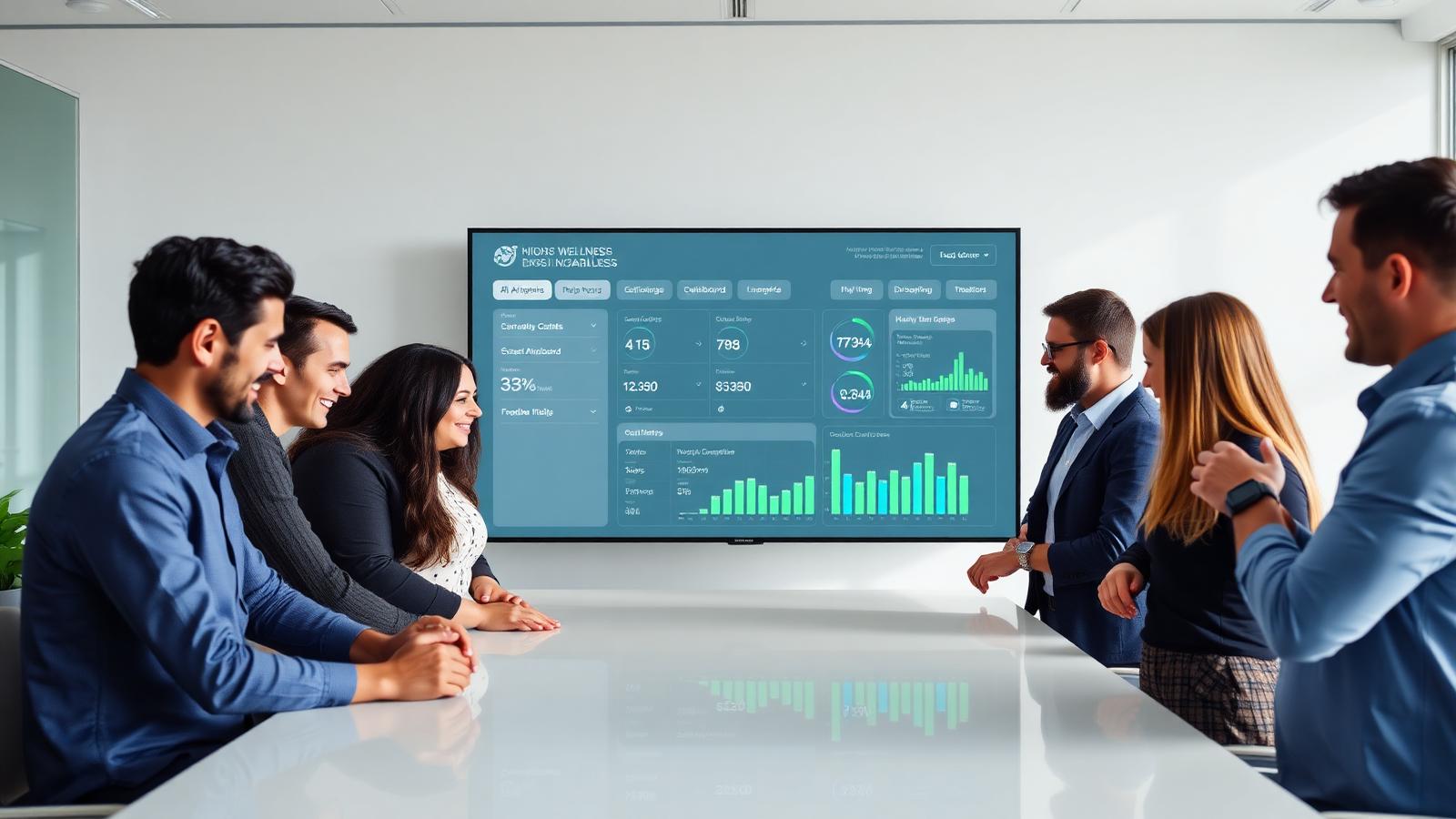
The metrics leadership funds are simple. Report them in a single dashboard with one qualitative story per period, and wellness budget tends to survive every cost review.
- Activation rate — percentage of eligible employees who joined at least one challenge.
- Weekly active participants — the true engagement heartbeat.
- Completion rate — percentage of joiners who finished the challenge.
- Repeat participation — percentage joining a second, third and fourth challenge.
- Self-reported wellbeing lift — short pre/post pulse survey, three questions max.
- Correlation with retention, engagement scores and absenteeism over the year.
Launch your 2026 AI wellness programme with PUML
PUML is built for exactly this new generation of corporate wellness. Launch a branded step challenge in days, add hydration, sleep, meditation, gratitude and photo-activity challenges as you go, let AI personalise the experience for every employee, and give your wellness team the reporting they need to keep the programme funded. It works for teams of ten and organisations of ten thousand — because the design is participation-first.